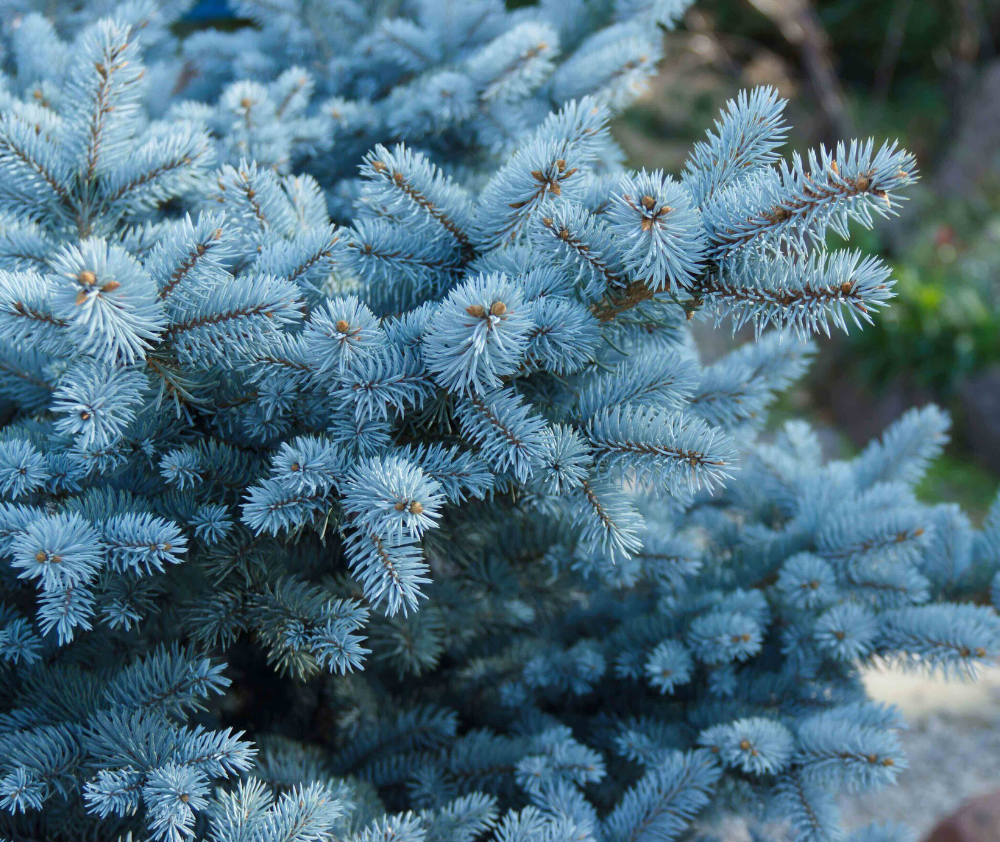
Every state has its own official tree, a living emblem that reflects a state’s natural heritage, character, and pride. State trees are chosen not just for their beauty, but for the role they play in the region’s history, environment, and culture. Here in Colorado, the blue spruce (Picea pungens) holds the honor and title of state tree. The tree’s connection to Colorado runs deep, being documented as a new species on Pikes Peak by C.C. Parry in 1862. In 1892, school children across the state voted the blue spruce the state tree. Despite that vote, it would not be for another 47 years, that the state assembly would make the designation official.
Standing as a symbol of resilience, strength and adaptability, the blue spruce continues the legacy of tree symbology in our culture. Historically, evergreens have been associated with everlasting life and the hope of spring, due to their ability to stay green year-round. And of course there is the Christmas tree, an evergreen tree with a legacy all its own. Many picture the blue spruce as the quintessential christmas tree due to its dense foliage and pyramid-like shape. Although the blue spruce looks like the perfect Christmas tree, it cannot be cut down for decor because its state tree status protects it on public lands.
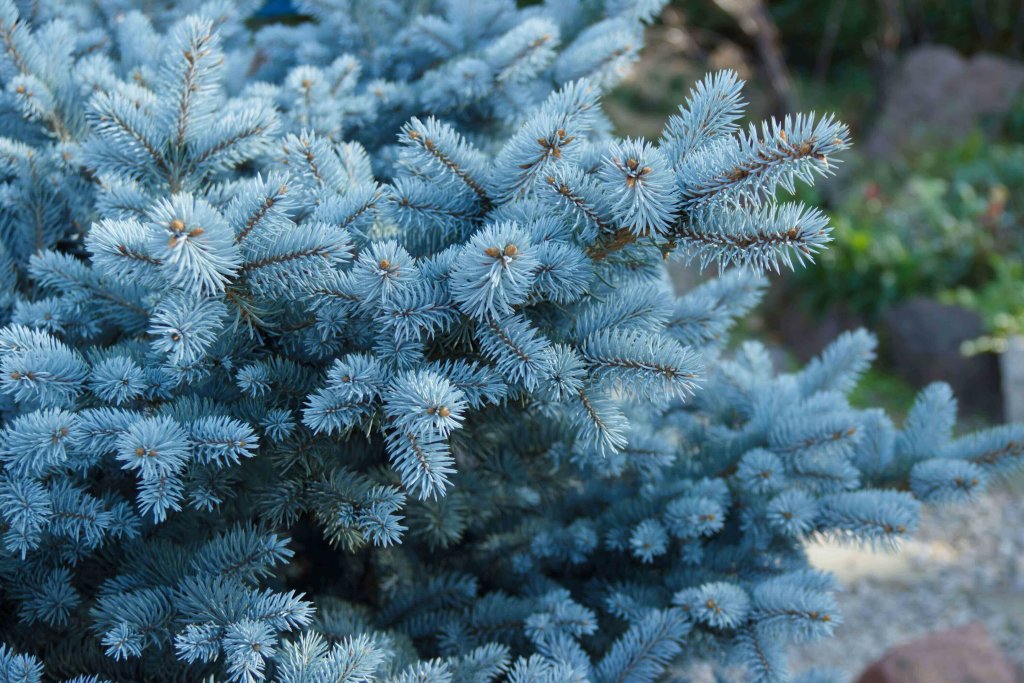
The blue spruce’s silvery-blue needles and snow-shedding, pyramid shape make it perfectly built for life in the mountains. 📷 Licensed from Adobe Stock
These same characteristics that make a blue spruce tree appealing as holiday decor are key to its survival in the Rocky Mountains. As the name suggests, the blue spruce has silvery-blue colored foliage. This unique blue tint is owed to a waxy coating on the needles, which helps to protect the tree from harsh sunlight and to conserve water. The pyramid-like shaped body of the tree with flexible branches extending out and down from the trunk is key to dealing with mountain snow. The snow naturally sheds down and off the branches instead of accumulating and potentially overloading branches to the point of breaking. The blue spruce’s ability to survive long, cold winters and drought ridden summers shows how it displays resilience and strength.
The blue spruce is much more than it looks, it provides vital habitat for wildlife in the Rockies. Large mammals like elk, moose and mule deer use the tree as cover from harsh weather conditions and predators. Smaller animals like birds and squirrels use it similarly to find shelter, but to also feast on the seeds in its pinecones. As the Rocky Mountains present challenging scenarios, these seeds can be crucial in an animal’s diet. Other birds like the Black-Capped Chickadee will enjoy insects that move amongst the branches and bark. By supporting many different species, the blue spruce helps to balance the vast ecosystems of the Rockies.
More than just a symbol, the blue spruce truly is a key part of life in the Rocky Mountains. The next time you are out in the forest, slow down, and don’t forget to stop and smell the blue spruce.
Written by Jayden Floyd, a naturalist at Walking Mountains.