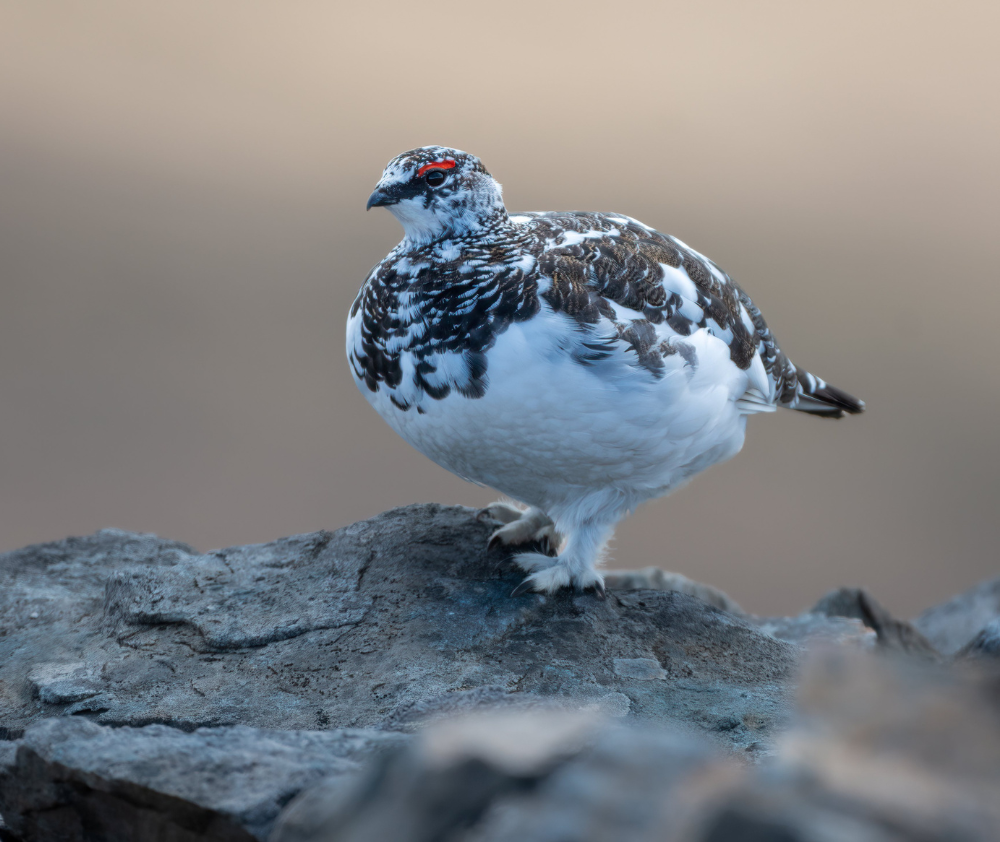
If you’ve ever walked through a snowy mountain landscape and felt as though something were watching you, only to see nothing at all, you may have unknowingly passed right by a ptarmigan.
Ptarmigans are small, gallinaceous birds that live year-round in some of the coldest environments, including right here in Eagle County! Gallinaceous birds are heavy-bodied and ground-feeding. They belong to the scientific order Galliformes, which includes pheasants, grouse, and quail. Unlike many birds that migrate south for the winter, ptarmigans resist the winter by staying put, requiring them to adapt through physical means, like camouflaging.
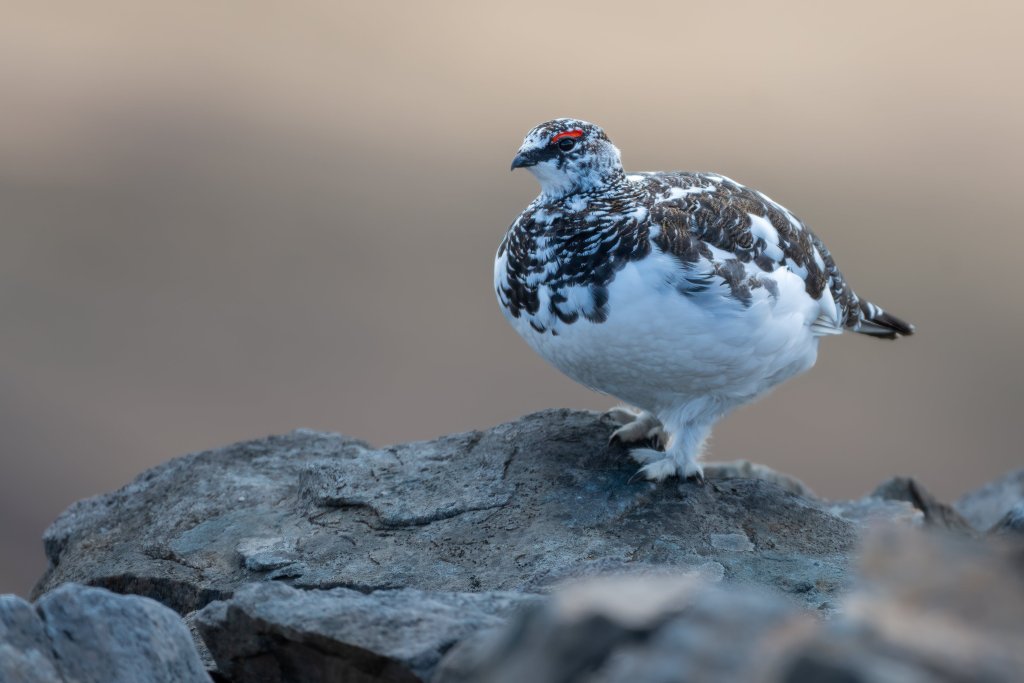
📷 Licensed from Adobe Stock
Perhaps the ptarmigan’s most notable adaptation is the ability to change feather color with the seasons. Ptarmigans are preyed on by predators like coyotes, foxes, hawks, and owls. Because they spend most of their time on the ground, staying hidden is their best defense. During the warmer months, ptarmigans’ plumage is a mosaic of browns, grays, and blacks, allowing them to blend seamlessly with the surrounding rocks, plants, and soil. During the winter months, when snow begins to transform the landscape, the ptarmigan undergoes a seasonal molt. This molt results in a substantial physical transformation where their feathers turn almost entirely white. Now with new plumage, the bird becomes very difficult to see against the white snow. This color change is essential for their survival. Avoiding detection reduces the sudden need for fleeing, saving precious energy—something that is of utmost importance in a season full of difficulty and scarcity.
When a ptarmigan stands still, it can look like nothing more than a ball of snow, a behavioral adaptation further enhancing the camouflaging illusion. Predators often look for movement, so staying still is another way to survive. Ptarmigans will also change their behaviors by snow-burrowing. During harsh, cold temperatures, they will burrow beneath the snow to rest. The snow burrow will protect them from the winter conditions by acting as an insulatory barrier.
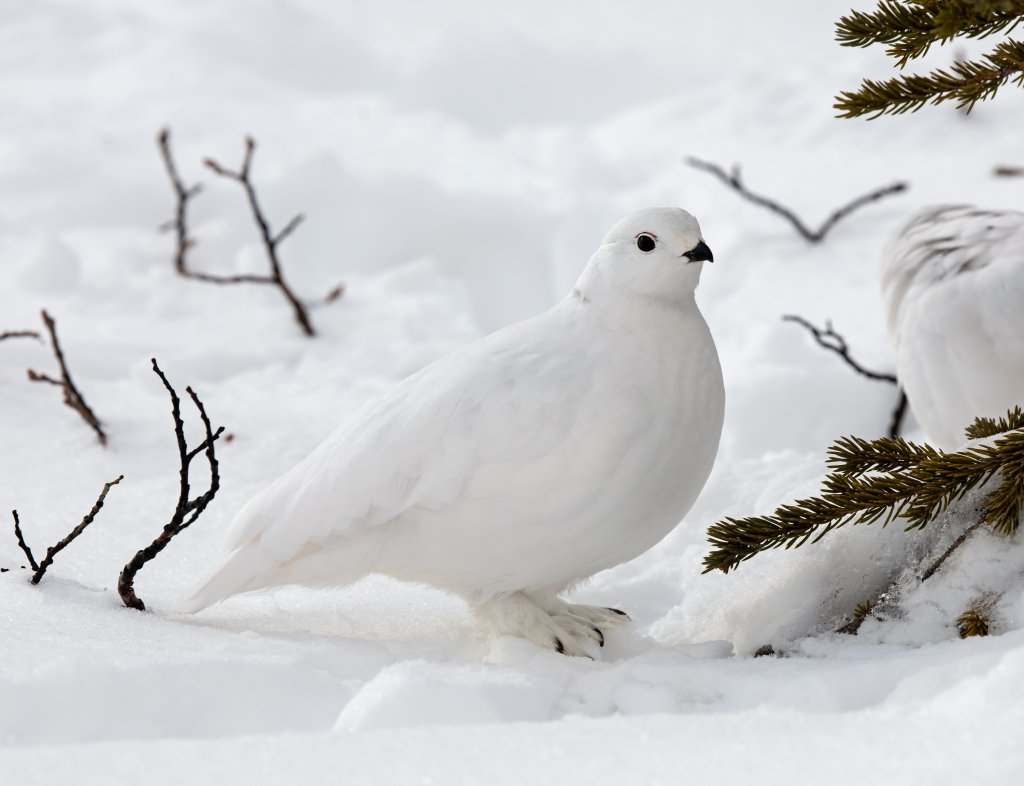
White feathers provide camouflage and allow the sun’s light to warm air pockets between feathers.
📷 Licensed from Adobe Stock
However, both these changes for ptarmigans go beyond camouflaging. The white color we observe is actually light scattering through air pockets inside individual feather structures. These air pockets trap heat close to their body, helping the ptarmigan stay a bit warmer. In the colder months, they also grow extra layers of plumage consisting of small, fluffy afterfeathers, further increasing their insulation.
Ptarmigans physically adapt head-to-toe, even including their feet. These birds grow thick feathers on their feet, creating a furry snowshoe effect. This helps to distribute their weight on snow, allowing them to walk across it more easily. The fluffy feathers also help keep their feet insulated from the cold.
Winter is an especially difficult and demanding season for birds. Flying depletes scarce energy reserves, and frigid temperatures exacerbate heat loss. By relying on camouflage rather than constant movement, ptarmigans conserve energy and improve their chances of surviving the winter.
The ptarmigan’s success demonstrates that when it comes to survival, sometimes the best strategy is adapting to the place you already live by being flexible and changing with the seasons. The next time you find yourself in a snowy landscape, take a closer look: that mound of snow might not be snow after all.
Abby Donato is a Naturalist at Walking Mountains who loves getting outside and sharing her passion for stewardship with others!